

With 9 cases confirmed and 11 under investigation, GPs have been advised by UKHSA to issue antibiotics to “anyone who visited Club Chemistry between 5 and 7 March and to University of Kent students, if they have been asked to seek preventative treatment. This is so that anyone who has travelled home, or away from Kent, can easily access this important preventative treatment close to them.”
“UKHSA also continues to advise anyone who visited Club Chemistry on 5, 6 or 7 March to come forward for preventative antibiotic treatment as a precautionary measure. This can be collected from the following sites, which remain open whilst people are still coming forward for the preventative treatment:
Senate Building at University of Kent, CT2 7NZ – open from 9am to 8pm.
Gate Clinic, Kent and Canterbury Hospital, Ethelbert Road, Canterbury, CT1 3NG – open from 8.30am to 7.30pm.
Westgate Hall, Westgate Hall Road, Canterbury, Kent, CT1 2BT- open from 8.30am to 7.30pm.
Carey Building, Thanet Hub, Margate Northwood Rd, Westwood, Broadstairs, CT10 2WA – open from 8.30am to 7.30pm.”
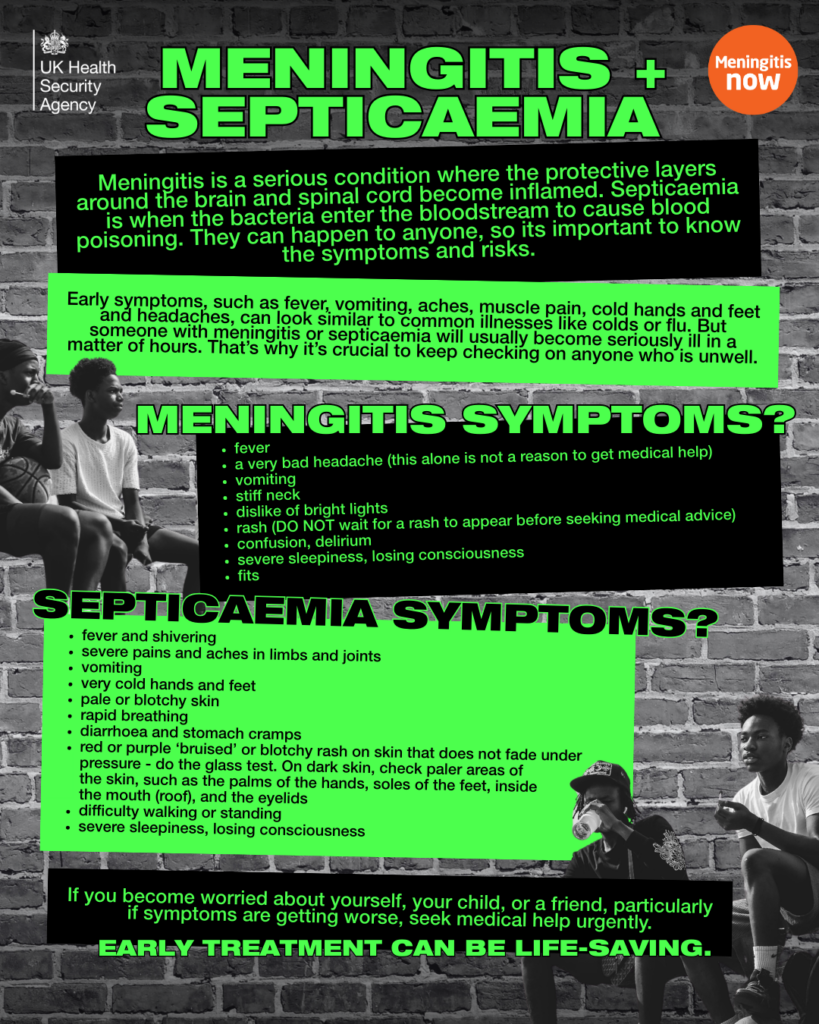
Signs and symptoms of meningococcal meningitis and septicaemia can include a fever, headache, rapid breathing, drowsiness, shivering, vomiting and cold hands and feet. Septicaemia can also cause a characteristic rash that does not fade when pressed with a glass. If you or anyone you know develops any of these symptoms, seek medical help immediately by contacting a GP, calling NHS 111 or dialling 999 in an emergency. Knowing the signs and taking early treatment can be lifesaving.